COMISSÃO DE VIAÇÃO E TRANSPORTES
Sobre o Evento
A Comissão de Viação e Transportes debateu a situação estratégica da malha ferroviária Rumo Malha Sul, focando em desafios de gestão, eficiência logística e a necessidade de investimentos. Foram discutidas alternativas para a renovação de contratos e a integração ferroviária regional para superar o isolamento logístico.
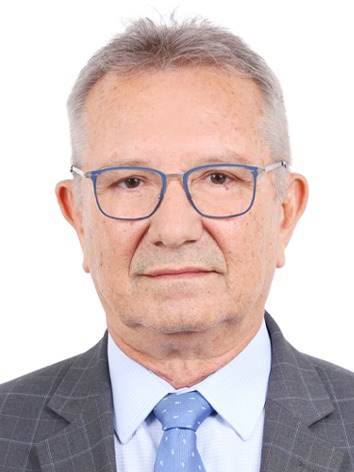


Representante - Concessionária Rumo Malha Sul
Thank you. Thank you. A deputado. Good day to all. Good morning to all the deputies present. We're seeing YouTube, also following the public audience. Can you pass, please? I think I'll give you a... a general, deputado Busato in the last 10 years, which is the period that they compete in the rumo. There was a question economic finance and contractual between the concessionaire Don't... uh... between the then Concessionaire and the Group COSAN, This resulted in a fusion. and from 2016 you have a rumo final and with this already been done not only from the Malha Sul, but also from the Malha Oeste, Malha Paulista, Malha Norte, and then In this period, in 2019, the Rumo vence the Leilão Norte Sul Tramo Central of the South, also. and from 2020, they start the work in Mato Grosso, in a state of the Mato to extend the ferrovia in the authorization the Ferrovia Vicente Vuolo. Can I pass, please? I think this first slide is a little bit more the same, mainly based on the talk of the Secretary. We have a contract that ends now, in March of the year, if we have less than a year of contract. to the concessions The Malha Gaúcha was extremely impacted during the in-sales of May 2024, It was... a structural in the state of Rio Grande do Sul, not only the ferrovia, it only the rodovias, saneamento, education, public security, the airport area, Uh... Malhaçu, as well said, was built in another context. It has a context and exploration territorial And in the Rio Grande do Sul, she also has a very strong connection with the issue of defense, So you can see that the Malha Gaúcha always comes from the border always tangencia the border and you always have a military military military So you have, because of that, a malha-sul is métrica, to not allow the interconexion of trains Argentina and Uruguay in the country, because the moment was the of diplomatic questions between the three countries. uh... The interoperability, even with Mercosul, through the livrament of Uruguayana, was lost with the time. huh? And now we need to rethink this ativo, to destining the trechos that have economic viability, the trechos that need to be subsidized, the best way possible, whether it's a renovation, a rumble, another model, a public call or or new license or new licenses. The question here, I would like to put more a point on it the talk of the Secretary Leonardo, of why there was a encolhment of the malha We had, especially in the editorial made by BNDES, in the 1990s, three factors of demand that didn't occur. And there were three factors of demand that were considered. There was a considerable volume of the volume between the Uruguay and the Uruguay. that never was consolidated. - A prohibition of what? - Volume. The transport is considered with Uruguay and Argentina, which never was consolidated. Even when the LL, at the time, operated the Argentine ferrovia, had been privatized. before being established by Christina Kirchner, even when it was the same company from both sides of the river, you didn't have a significant volume. This volume was going on by a truck, and going on by another way. This is the first frustrating demand that this concessions had. The second frustrating demand is in the west of Paraná. It was expected something about 2 to 4 million of per year. in the Oeste of Paraná It was encampated and the government of the state of Paraná took this car that was private took it to us the concession of them. transport more or less 700.000 tons today. So we are talking about a frustration of 70% of the volume. And the third one that explains, mainly, the connection between Paraná-Santa Catarina and Rio Grande do Sul, is that the study was done before the change in regulatory order of the transport of fuel. Uh, During the licensing, there was a law where the federal government imputed volumes to be transported by cabotage Ferrovia and roadway. and the priority was always in order of the volume. So you had a obligation to transport, the client was obliged to hire a ferrovia for transport of dangerous products, gasoline, diesel, etanol, And this stopped from 1997. Yeah. And the fourth point, after the three frustrations and demand, I think it's important that the Secretary also has been saying, Yeah. you have vocational distances for the transport mode. So we have something which is almost magic in the literature of transport and logistics. At 400 km of distance, the transport and the rodoviary. It's the most efficient and the most efficient way of making sense. 400 to 1600 It's the place where you operate a ferrovia. It's what makes more sense. 1600 to cima, cabotage. And then we have, in Rio Grande do Sul particularly, a peculiar situation because of how the ferrovia was built. Cruz Alta, Rio Grande Ferrovia. is 60% more than the roadblock alternative. or, you have a highway that is 60% greater than the roadside distance. So you are already close to the limit of those 400 km, the distance is about 400, 500 km. You are very close to the zone of viability, of efficiency, to know which two modes of transport are better. - Yeah. - "Quase se igualam". - "Quase se igualam". E? you have a highway that is 60% more far. which obviously impacts on the cost and time to transport this load. So I think this is the diagnosis of Malha Sul. as is, today. a little bit of the reason of these areas not being economically viable especially with the regulatory presence. I think that the important part is If it's for public call, short line, and be transformed into authorisation, you will have to do a diminishing the regulatory rate. to remove a little bit of the cost and the weight of the state in the operational ferroviary And now we can talk about the last decade, I think. and show how the humor and they come operating and they come to invest for the operation. You can pass two, please. So, with regards to volumes, we don't have growth, but we don't have decrease. So, even if there were, in the last 10 years you have practically had encolhement of malha, except for the climate disaster, of May 1924. Yeah. we didn't have a loss of volume. So, our participation it is still relevant. We are talking about 13 million tons The peak of the Rumo Malhaçu is around 1,3 billion TKU, which is the blue graph, with 21 billion TKU last year. If we take the part of the Tronco Sul, which is the transport of combustion between Paraná, Santa Catarina and Rio Grande do Sul, The past year was the best year of transport in history, from the "Rumma Malhaçu" We work with market share in the house of 20% of the Porto of Rio Grande. and 25% in the port of Paranaguá. while the sugar in Paranaguá market share is at the house of 95%. So, almost the total of the sugar export for Paranaguá comes to the train port. If you can pass two more, please. And how do we do it? We do this by continuing investments and here is pungent in proportionality of transport. The investments here listed, They are in the present value of December of 2025, so it's real, not nominal. They were corrected by inflation in every period. We got the list of all the investments between the three concessionaires that operated, this is another important point that we don't talk about, is the only company that passed by three concessionaires, the only company that passed by three concessionaires. It didn't work with the Atlantic Ferrovia, it didn't work with the LL, and we are taking this contract until the end. with much pride. We have a principal point of the point here in 2016 and 2017 that, when someone assumes There was a process that went to the Cade, this was a process that was demorated, this was the case, deputado. When we started this process, we saw that the only way to solve the problem that existed with another client, with another transportor, We have a project to General Electric, which is now the UBTEC, which is the largest locomotive locomotive in the world. of a exclusive locomotive, to be used in Malha Sul. "Curvas apertadas", "Ferrovia Imperial", considerable ramps, You don't need to use a product of a market locomotive, you need to use a product. own. This was developed by the Center for Research in Curitiba from the research of the Bobtec in the United States, and from 2016 they start to be sold. So we have 50 locomotives ES43 BBI which is a project made with a Rumo, for a Rumo, Malha Sul. bitolamétrica I think that the FCA, the FCA, has also been buying these locomotives because they have the technological pull that was given. And then in 2016, 2017, it's when we pay the good part of the payment of these 50 locomotives that are in operation today in Malha Sul. The graph is so and down because you have different moments of investment for example, this year As locomotives come to the 10th century, with 10 years you have to change the diesel engine. It's the most expensive maintenance that exists in a ferrovia in a rodent material. You have to take a locomotive that costs 25 million dollars and change a equipment that costs 5 million dollars. So this year, for example, we will have more a increase of investment, because we will have to change the diesel engine of about 10, 15 locomotives. "Dorment". "Dorment" dura 7 years. So you have cycles of investment. Trilho dura 20, you have cycles of investment. The total of these 29 years of concessions since it comes from the federal government for these three concessionaires in the following, was 17,8 billion dollars. in the actual values. In the last decade, it was more than the middle. or, I'm going to do with just one of the three legs of the contract investiu mais than the other two concessionaires. in 66% of the time. Can I pass another one, please? Além disso, we also have a conjunto of taxas of outorgue and concessions. I will again repris the talk of Yuri and the Secretary Leonardo Imagine if we could have put 3,5 billion dollars in a connected account to be used in the same sector. 3,5 bilhões de reais, deputado Busato, é quase o valor necessário to do the recovery from the south to the south, ating by the drought and climate change of 1924. or if this money didn't have gone to the Tesoro have been in the sector you would have the resources necessary to make the reconstruction prontamente the ferrovia affected. And again, we paid more than half of it. in the last decade. or, the PESADO was now, especially with the end of the Arrends, and the assignment of the term of session. And with all this, how does it look for company? And here we talk again about the private perspective, right, people? We know about the mistakes of the contracts of the 1990s, But how did the company have been in the last 10 years since it was taken control? completely no prejuízo. uh, even with the improved material rodent, in via, in volume, in energy efficiency This company has approximately 320 million dollars per year. Uh, to be able to make those investments in the second slide, and thus keep the volume stable, the control had to have more than 5 billion dollars in the period. Here are the nominal values, not corrected by the inflation. These are all values present in the auditory balance of the company, which are included in the CVM portal, for access to public access. So we have a EBITDA of 5,5 bi a report of 5,2 billion. And then we have the CAPEX, which I showed you, the investments, in the house of 6 billion in this past decade, the payment of the debt, and our current liquidity in the house of 750 million. What does a liquidity mean by 750 million dollars? we can do two years. without a new support, without needing to pass again Pires and ask money to the controlador. we can remain two years of extension contractual necessary to that the government, the NTT and society the public involved, obviously, Dr. Fernando that they can do better study and take the best decision. with regard to this. And, last, a brief report about the work of the Ministry of Health. The work group started in November of 2024, It's a work group formed by entities government, so they were PPI, ANTT, InfraSA, Beniti and the Ministry of Transport The rumble began to be called in February of 2025, natural, first the government aligned and then called the concessionaire. But to promote understanding until July of 1925, when the GT ended We did a presentation of three proposals for renewal of the concessions. considering scenarios different, atending to different orders from the Ministry, And then we hope to receive the report from the GT, continue contributing. And with this, I thank you again, I thank you again, I thank you all, I'm at the disposal. I think it's very complete here.
