COMISSÃO ESPECIAL SOBRE ALTERAÇÃO NO CÓDIGO DE TRÂNSITO BRASILEIRO (PL 8085/14)
Sobre o Evento
A Comissão Especial debateu propostas de alteração no Código de Trânsito Brasileiro focadas na modernização da infraestrutura viária e na segurança pública. Os participantes discutiram desde a implementação de tecnologias de cobrança, como o free flow, até a necessidade de maior transparência na fiscalização eletrônica e o uso de engenharia para moderação de tráfego.
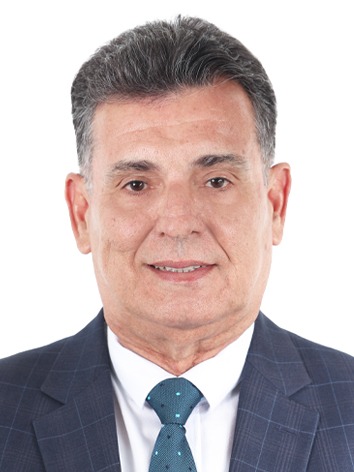


Gerente de Projetos da SENATRAN - Gerência de Projetos da SENATRAN
- Awesome. You hear me? I'm hearing you. Good afternoon, Mr. President, Mr. President, Mr. President, I will be able to present. I'm Fabio Vargas, director of the Senatran. And President, I prepared here a material to be my objective about the topics here, and I'll be able to do 10 minutes here, ok? So, with satisfaction, I represent here the Senatran, the maximum executive of the União which in this public audience is one of the main themes for our daily security. and modernization of the management of the transit in Brazil. the speed of the speed of the mobile radars and the system of pass in the free flow. both reflect on a direct line in common Use the technology to save lives and improve the user experience, with transparency, jurídica, and focus on the citizen. I'll start with the Móveis, President, It's very important to talk about the colleagues here in relation to the speed and so on but the theme is brought here for us to as responsibility for the Secretariat was to talk about application of the physicalization by the way of mobile radars. So when we talk about speed, it's important to be very clear The use of mobile radars is not something that is not mandatory or not mandatory. We have the resolution 798. 2020, which is a goal of this First point. The Móvel is a legitimate tool for the Fiscalization. It was previsto in the norm, in the resolution of the contract 798. And he exists just to allow a more dynamic autosy. especially in places where the risk is not fixed, where the behavior of the computer is going to vary. But it can be used to be used to any way. The issue of the industry that we talk a lot about, or we hear it, not regulated in the resolution. The same resolution has been given important limits for this type of equipment. One of them is: In urban areas, these equipment can be used with a limit equal or higher than 60km. In rural areas, only in the road with limits to 80 km or in roads with a limit of 60 km. or, there is a clear record of where this type of fiscalization can happen. Além disso, a norma exige um planejamento prévio, então não basta simplesmente escolher um ponto and put the radar to work. The use of the radar needs to be linked to the vocails that have. or It's a risk-realization. Another important point, that I want to bring, is that we reforce the transparency. The transit transit is obligated to map and publish in their sites the areas where there is a fiscalization with a radar mobile. That's right in our resolution. And this is completely the idea of a fiscalization surprise. which is what we don't want in our country. The resolution also brings some regulations very specific. For example, If there was a fixed radar fixed implemented in the field of urban areas, The mobile can be placed after 500 meters of the vehicle. If it's in the area of rural areas or rural areas, this radar mobile can be placed two kilometers ahead. This is to avoid the overpositions of the fiscalization and guarantee the coerence of the system. Another important point is that the radar portátil is used in a way of extensiva. which means that we need to be uniformized, the equipment and the operator must be visible and there can be no type of occult. It can be found behind the tree, it can be found behind the tree, a pole, or any other elements. This is to make clear to the user that the trecho is being fiscalized by a type of radar different from the normal, which is not fixed. And of course, these equipment should be homologized by the NIMETRO, and the via should be devidamente sinalized, indicating that the fossilization is occurring. Bye. So when we look at this whole model, it's evident that it's not about picking up a surprise or arrecada. It's about a structured system, with rules of transparency and technical, focused on a unique goal: reducing the sin and saving lives. controlling the speed of the vehicle of the local vehicle. Let's talk about the second topic of our audience, deputado. Presidente e o deputado Aureo Ribeiro, who is there with us. Let's talk about Free Flow. Very well, Marco Aurélio brought a whole summary of the data. as we took through the deliberation 277 do CONTRAN, but I wanted to show here some points just to make clear The main point of this is the derivative and I'll just be clear to everyone if there's any questions about the issue. So it was established a long time of 200 days for regularization of open spaces, or people who didn't pay the tariff, they will have to be able to identify what happened in some place where It was used to the technology of Free Flow and the payment of your tariff and during these 200 days there was no new characteristics of inflation, not can be applied as a loan or a CNH, and the process of the process will be suspended. The most important thing is The payment of the tariff within this period implies canceling the payment of the application, exclusion of the point and integral of the situation of the user. And if the citizen has already paid the loan, he will be solicited the administrative process, And still, the event of the relationship with the organ of the other Another important point is the technology. We are very concerned about communicating with the citizens. So, the deliberation has a long time of until 100 days to be able to have a integration of the concessionaires, along with the Máximo Executivo of Trânsito, which is a Senatran. This will allow us to do what? We will be able to provide the citizens on the C&H app, the Brazil app, the information about the passage in the free flow, the value that he is going to be and how the situation is. With these information, we believe that the user will do the job of the job of the consumer to pay for the service that was offered, and thus, not be able to be I'm going to incidise on evasions of the bed. So we bring transparency total to the process. We have access to information facilitated and a immediate regularization. These measures show that the public policy is being conducted with three pillars. The security and viability, when we talk about speed, modernization and efficiency, with the free flow, and the protection of the citizens. with this regime of transition prevailing by deliberation 277, that brings this protection the right of the citizen to be able to regularize the act that many times he didn't know that would be paid. So the secretariat is not the sanctions, but to build a regulatory environment that is clear, confident and confiable. because in practice when the rule is transparent the technical criteria and when the citizen has access to information "Espera-se que o comportamento do cidadão seja melhor." So, what we're structuring is exactly this. a system in which the citizen understands the rule trust in the State's actions and consequently Adere as regras e traz segurança para... for the situation that we have in our country. I can't put it on the floor for any question and I'm grateful for the participation in this audience. Thank you. -
