COMISSÃO ESPECIAL DA POLÍTICA NACIONAL PARA PESSOAS COM AUTISMO (PL 3080/20)
Sobre o Evento
A comissão debateu o fortalecimento da rede de atenção ao autismo, enfatizando a necessidade de capacitação profissional especializada e a integração entre saúde e educação. Foram priorizadas estratégias de intervenção precoce, monitoramento do desenvolvimento infantil na Atenção Primária e o aprimoramento das políticas públicas voltadas à primeira infância.
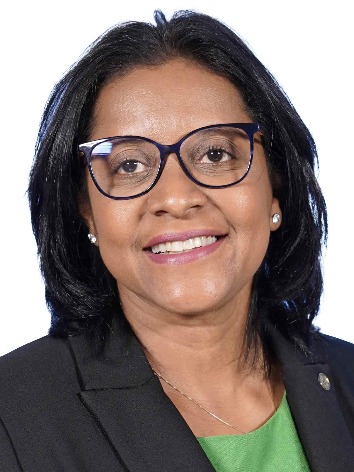


Conselheira Federal de Fonoaudiologia - Conselho Federal de Fonoaudiologia
*sad music* Good afternoon to all the people. I'm going to do my own audio description. I'm a white woman. with the hair, a little below the shoulder. Behind me I have the flag of Brazil. I want to thank the chair of the deputy Meili Serafim, all the the members of the table, the present and the guests that were presented before me. It is with great satisfaction and honor that I represent today the Federal of Fonodialogia for the request of our president, Silvia Tavares, who couldn't be present, to discuss a topic of importance. to talk about 10 minutes is a great challenge, so I'll take advantage of the previous talk, I'll try to put a little bit and just leave at the disposal of the Federal of Phonology to subsidize this committee, in what is necessary to contribute with this policy of amplification of the people with TEA, especially in what is respect to capacity and training professional. I would like to bring some points that I consider important to structure, with regard to the professional capacity, considering that the care of the person with TEA is a care that needs to be integral, with intersetoriality, remember accessibility and inclusion, and respect, above all, the singularity of the subject, of each person with a disorder. The care for people with TEA can't be understood as a isolation act, as already said. and needs to be interlocated sectoral and health professionals. It was said in the previous talks about the need to be assembled by the work of the SUSE, We know that there is a commitment of the ministry, of the council, of the autarquies, of the health professions. But we need to have... It's very clear that we don't just have a number of professionals, they need to be well-reported and qualified. And in this sense, I'm very happy with the talk of the professor Laís that reminded us of the importance of approaching the theory science and the professional practice. This is done in the care room. So we defend the formation, the graduation, with presenciality. This is very important to bring us here. I'll take a look at today to remember that. It also talks a lot about the diagnosis, talked about children with TEA, but we need to remember that we have a great number of adults being diagnosed with neurodivergences, within the spectrum of autism autism. and that the same diagnosis has been modified. So, understand the evolution of science, the identification of problems, and this obviously, that prescinds from a continuous capacity of professionals, whether the rehabiliters or all the other professionals in health, including education, social services. and the others who are in contact with people with TEA, thinking about social inserances and living as citizens, having a full life. and qualified I The symptoms and signs are different in each person, impacting variously functions with TEA. The first time in Brazil, the Demographic Center of 2022 included a specific question about TEA and identified 2,4 million people with the diagnosis, corresponding to 1,2% of the Brazilian population with two years or more. The epidemiological data reforce the need of training and professional training. Thank you. According to the MS, the beginning of the transtorn occurs during the development period, typically in the first infancy, but some symptoms can appear just later, depending on their intensity and when the social and function demands are limited to these subjects. In fact, it's this, that in the last few years we have a crescent diagnosis of people who have been diagnosed. Thank you. education, and opportunities that ensure participation social and quality of life. We also know that the diagnosis is not easy. It's quite complex. And it's not the diagnosis that determines the care, that determines the intervention. So, the precoce identification of alterations, especially the communication, I'm talking about the phonology, understanding that the communication is very frequent in these people and that bring So we don't have to wait a diagnosis closed for the treatment of the treatment of the treatment. Yeah. and It's important to think about the training program, consider the integrity of the care. It was already said here, by the members of the Ministry, that it is guaranteed access to different points of care and care. having, of course, primary care the entrance door and the care door, but remembering that people with TEA need to travel through all these networks of attention and have a careful with characteristics of integral and longitudinality. We have talked about precocious identification, and we need to remember that these children will grow, be inserted in the school context, become adults with children. important aspects of neurodivergence, that need to be guaranteed in the care and health care, not only in the respect of issues specifically to the transtorn, but with all the quality health. I would like to remind you that there are multiple approaches, based on scientific evidence, but always oriented to the singularity of each This is a point of concern, because there is a tendency to determine a single method, as obligatory or unique, both in health care and in school. This type of imposition contrary to the law of professional autonomy, granted by regulations like the law 6.965, of 1981, that regulates the fonoaudiology and other legal marks that are legal in the profession of health and education. consequently, they are deprived people with TEA from access to individual resources, that respect their own forms of communication and social communication. to improve their emotional development, social and communicative. In this context, the PTS, the Terapia Singular Project, has a central role, so that the care is effectively centered on the subject and built in a shared way with a interprofessional articulation. and intersectorial. involving education, social assistance and, when necessary, the justice system and others, guaranteeing support to inclusion social and effective rights. It is imprescindible invest in training, education permanent and continued health, as well as intersetorial, so that professionals are prepared to deal with the heterogeneity of the spectrum, so that they can guarantee the rights of people with TEA. in the education field, I think it was well explained, pensar, considerate the adaptations, and adequate education educators, understanding the specificity of communication and social development, with the construction of strategies that favor the learning and effective participation. - Yeah. Therefore, this law project represents a strategic opportunity to qualify a public public policy focused on people with TEA, being fundamental to be integral, intersetorial, based on evidence, respect to autonomy professional and, above all, centrally in people and their singularity. The Federal Federal of Fondiology affirms its availability, We are putting this committee to contribute to the technical and technical text, and to strengthen the public policy and provide care, inclusion, and cidadania, in a way more effective and effective way. Thank you. Thank you.
