COMISSÃO ESPECIAL SOBRE ALTERAÇÃO NO CÓDIGO DE TRÂNSITO BRASILEIRO (PL 8085/14)
Sobre o Evento
A Comissão Especial debateu a modernização do Código de Trânsito Brasileiro, com foco na reforma da formação de condutores e na adoção da filosofia de Visão Zero. Os participantes enfatizaram a necessidade de priorizar a percepção de risco e o comportamento seguro em detrimento de modelos puramente burocráticos.
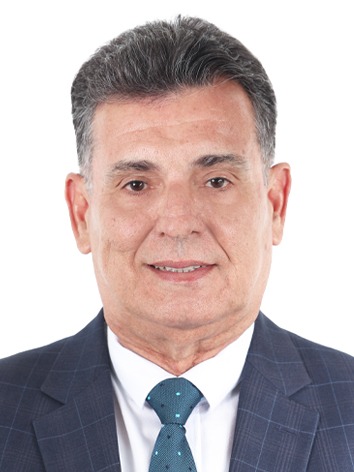




Presidente da Associação dos CFCs do Estado de São Paulo - ACESP - Associação dos CFCs do Estado de São Paulo - ACESP
- Good afternoon, good afternoon, good afternoon, good afternoon everyone. I mean I'm going to start thinking about the way it is adequate to the future of the form of conductors in Brazil, we did some esbozos here to work just on this issue that involves not only the form of conductors, but also all this balance that the resolution of 2020 brought to the form of conductors. Today we have, for example, a CSC Senat, being able to have categories of heavy vehicles, Why is it necessary to talk a language more actual? I think that this is a bureaucracy that we have today in the formation of conductors, and just this amount of questions that involve finance, is what has made motorists proficient from the market. of heavy vehicles in Brazil, just because of this issue that involves this bureaucracy, the specific niche that the people will act. These requirements that the companies are in the transport, even more, even more, even more equipment that they drive, and the complexity of what you have in the market. So I will talk about some of the important points here. do We are talking about that today... Now it's done. which is today's trilema of the Brazile. The resolution of the 1020, she failed in security, priorized technology AD, two hours of practice and opened the mão to the risk of viability. Yeah. the market is accused of having a monopoly, which is falling in the cost of the CNH, which is about 4.000, and it is a low income rate and rural areas. And in this same balaio we can put, including, the motorists of categories of profissionals. So, there is a study that is done. to have a cost accessible to the citizens, to maintain the security of the state and the state, and the sector and the sustainability of the sector, something that has not occurred until the present moment. Today this is the cost comparatively, the regulatory aspect of a habilitation. the cost of the citizen But then I ask, is it being offered quality? Of course. The Department of Conductors always had their role in working with excellence. What was discussed in time, was just the requirements within a resolution that requires the formation of conductors. Today you have, in practice, this requirement of technology, technology, technology, but we have to remember that between a condutor and a machine, there is no technology. There is a vehicle that will drive a vehicle, a truck, etc. So, today, we have DETRANS and SENATRANS much more worried about doing events related to technology, than in what, between a volante and a human being, there is a life. That's exactly the problem we are facing. So, this is the comparison. Do we need to make a CNH more accessible? We need to make a CNH more accessible. But we need to make a CNH more accessible without the security. without pular os pilares. This is the important point. So this is a regulatory aspect of what we are living today. Exactly today. Today we have a great demand of social exclusion of those who need to work. We need to find a way, a method to innovate and make sure that young people, more cedo, could access the "categories" "pesar" for example. And how would that be? Amen. Let's see if it already changes. It's a freedom in the formation of conductors, but since it's for a school of transit. The state deixa of microgenecer the method of teaching to concentrate exclusively on the quality of the conductor formed. And the rules of the rules. The extreme of the evaluation, today, the president, has no idea, was to have a noxion, was to have a balance, for example, of basic abilities. Today, with my colleague here, who is here from my side, how a company of transport will hire a motor driver that doesn't know how to use a balance? He doesn't know how to doca The resolution 2020 flexibilized this so much. manual de exames hoje você vai formar um condutor onde ele vai sair para a área de trabalho com um veículo que é fatal o acidente é fatal veículo pesado é fatal ele não tem chance alguma When it happens, it's fatal. And it's not ready for the market. the demand will be less. We will have motorists of vehicles in less than two years, because it is not interesting, it is not a lot. Today, democratizing access to the categories A and B, which is the biggest niche of products that a center of construction is today, varies this number, of 4.000 to 1.000. But see... We are not forming. two aulas don't form anyone This is the problem. We are not faturating? No, we are not faturating. What we are faturating today is the state and the company of technology. And how does a company adjust it? with all the demand, being that there is no benefit any. a company, to offer value and also bring access to those who really need to be formed, to get a job, to get a job. This is the biggest goal and challenge that category has been faced for years. So, this way we can't destroy access to mobile market for people of low income. Especially in the areas rural. Now, this is the moment discussion. This is the crucial point of what has caused this big divergence in sectors, just under the points that we are facing on the street. Today, the schools of transit, which is what we intend to present here, is a evolution of CFCs. which are currently currently CFCs, they would need autonomy. Today, for example, if you go into a program of conductors and apply for a citizen, saying, look, two classes are not necessary for you to be able to form, you need to do more classes, you need to do more capacity. What will happen? He will look for the PROCON, he will look for the competent ones to try to rescind the contract, because the schools of transit, in the case of CFCs, they don't have autonomy on the citizen. Calma, veja, então se nós estamos lá como formadores de condutores, por que nós não temos autonomia de dizer em qual momento o cidadão está preparado eventualmente para poder ir para o exame prático? In the way, the resolution of 1020, it helps the evaluation exames, so it is necessary to be rigor in the evaluation. You can even flexibilize the formation within a transit school with competent professionals. But you need to endure, really, the evaluation and practical evaluation. There is no negotiation about this. This is impossible to reach. If you have a fair and competent evaluation, not what has happened in the States, You can flexibly, because even if that person doesn't have prepared adequately to do the exam, in the case, she will not pass. The way that was done is done, the manual of examin, practical today, first, the DTRs were not adapted. to be able to do it. Resumo, there are some states that use a closed line, that are like a movie scenario. They form a street scenario that doesn't reach any nearer, because you don't have a dog, you don't have a bicycle, you don't have a motorcycle. It doesn't reach any nearer than the street. So this needs to be really discussed. The requirement of responsibility, the requirement of the certification, in the transit schools in the state of the state, if you will hear the case, which is today's scenario, and the responsibility of the state, for those who are going to equalize. And this is just the state. The state has to have autonomy, according to the 22 of the CTB, to determine the level of credentialing that he will be able to do, at the way equal to the state, in what is what is the state. Each state has its own particularity. We can generalize it this way. with what happens in São Paulo. The fuel is much greater. today we have a question that discusses about the CFC traditional, which were made in campaigns by the government, denigrating the image of the auto-schools, CFCs, and proposes here as schools of transit, which is a service premium, specialization in complex, and over-the-served survival, and over-the-served survival, and over-the-served survival. It is what the category pretends, what the category wants, caminhar in this sense. The new portfolio premium of schools would be a simulator of the last generation, the training, the defensive, the training, the return. And, there is a lot of this point, about education in other countries. What would be the parameters that we would follow? We would have to create our own model. Today, the Brazil is still fighting for the transit. We have to follow our identity. We can't keep all the time trying to base it on the American or European. So I would say that the best way to apply today in Brazil would be the Japanese padrão. However, the Japanese padrão here with the financial adversity that exists in this country, many people of low income would be out and not be able to be able to. And this is also what we look for. - Thank you. I think this is also a question that involves directly the form of conductors. We can't open the form of conductors in the center of conductors, in the case of the transit transit, for us to have the communication necessary, to be able to structure and deliver the motor to a future company, devidamente habilitated with safety. Today there are some bureaucracies that I don't have need, I don't see a need of market, and nobody talks about this topic, I don't understand the reason. But today there is no need of the category C. It can be absorbed in one part for category B and another part for category D and E. of transport, like the car, and you can do a right strategy, you can move the category D or E, being direct from the category B, with less than 20, you have 21 years, you would have to look at better the specialists, so that we could make a plan for the category B to the category I direct. to be able to absorb this new car, so that we can put the motorist in the market, but the motorist that is devidamente trained, habilitated and formed. And this, the transit schools, which are the CFCs currently, are ready to do. It doesn't need to be changed. It's just a change to this question and bring a new form of a specific niche of new motorists to the market. - Thank you. In this case, the state is a responsibility of the state, a rigorous state, the state abandoning the inefficiency of the fiscalizer of a class and concentrates 100% of its energy in the final barrier, the examin practical, right? Voltando with the balises, voltando with rampa, with all this observance. Look, I had the opportunity to participate in a fantastic matthew, which is one of the journals of the greatest repercussion in Brazil. It was made a research where 78% of the brasileers want to return to the balises in examinical practice. A woman, for example, who studies, who does the school, and seeks independence from her, she doesn't want to go to the school and pay for the car. She looks independent. She needs to be able to learn a baliza. So, this is a adequate form. What has happened in the exames practice today is not possible to form, not possible to take into account. This has to be reviewed immediately. Thank you. This is a "sboço" I left the pattern of our intention with the report. The training of the training of the training of the training, which would be schools of transit, are ready to enter this new world. We are ready to form with quality, and especially when we are talking about the heavy vehicles. I think this is important. The training of the training today, unfortunately, is high demand. The training of the training of the training is available, expensive, expensive, and there is a lobby. I think this is a map of gains in the ecosystem, it's a balance. I think This is the adequate way we have today for the national mobilization. I think this has to be seen, has to be seen, because we have a good thing to take advantage here. The opportunity legislative, the approval of this initiative, gives to Brazil a policy of transit modern, that solves the history of the transit, a more secure, a more dynamic, and a more efficient state. But remember, we can forget about the rules that involve the laborers. Today, the issue of the autonome, it doesn't work in the CFC, because it is pregando a issue that involves the responsibility of the time. and then there will be more damage to the CFCs. So this is not the way, this is the actual way, it doesn't work. I would like to thank you for the opportunity. Thank you. And
