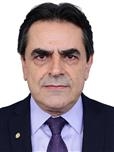
Domingos Sávio
Últimos Discursos
PLENÁRIO
O Deputado acusa ministros do STF e o Poder Executivo de envolvimento em esquemas de corrupção e obstrução de justiça, defendendo a necessidade de processos de impeachment e mobilização popular.
PLENÁRIO
O Deputado defende a urgência na votação do PL 108/2019, que visa atualizar a tabela do Simples Nacional e do Microempreendedor Individual (MEI). Ele destaca que a defasagem atual, somada aos juros altos e à complexidade tributária, sufoca as micro e pequenas empresas, tornando a atualização do limite essencial para a sobrevivência do setor.
COMISSÃO MISTA DE ORÇAMENTO
O Deputado manifesta sua intenção de participar remotamente da sessão de votação e acompanhar os trabalhos parlamentares devido à sua agenda de compromissos.
COMISSÃO MISTA DE ORÇAMENTO
O Deputado defende uma análise cuidadosa do projeto que suplementa recursos do FNDCT para evitar prejuízos a outras áreas, como habitação e biotecnologia. Além disso, apela pela celeridade na definição da relatoria da LDO para assegurar um planejamento orçamentário eficiente, citando preocupações com infraestrutura, questões hídricas no Norte de Minas e o custeio de hospitais universitários.
COMISSÃO MISTA DE ORÇAMENTO
O Deputado manifesta concordância com a inclusão de matéria na pauta da Comissão Mista de Orçamento, resguardando-se o direito de solicitar vista após análise do relatório.
COMISSÃO MISTA DE ORÇAMENTO
O Deputado solicita a oportunidade de realizar esclarecimentos adicionais e aprofundar discussões sobre temas não especificados, pedindo uma decisão sobre o prosseguimento da pauta.
COMISSÃO MISTA DE ORÇAMENTO
O deputado critica a falta de detalhamento em projeto que amplia gastos públicos em 13 bilhões de reais, questionando a responsabilidade fiscal do governo frente ao déficit público, ao aumento da carga tributária e à falta de atualização da tabela do Simples e do MEI.
COMISSÃO MISTA DE ORÇAMENTO
O Deputado solicita mais tempo para analisar um PLN que sofreu alteração orçamentária significativa, saltando de um valor simbólico para a casa dos bilhões, visando exercer uma votação prudente e esclarecida.
PLENÁRIO
O Deputado destaca sua trajetória e defesa do fortalecimento do cooperativismo no Brasil, ressaltando a relevância da Lei Complementar 161, que permitiu a atuação de cooperativas de crédito com o setor público e ampliou a capilaridade financeira em municípios menores.
COMISSÃO ESPECIAL SOBRE O NOVO ENQUADRAMENTO DO MICROEMPREENDEDOR INDIVIDUAL (PLP 108/21)
... Thank you. Thank you, Kátia. You see the importance, we are talking about a question that in principle seems eminent economic and tributary, but it has a great interface with the social area, as well as we... We are reaching out to the people who interact, many of them as well as MEI. So, I'm going to be honest with you, I'm going to be able to pass the questions to the relator. Deputy Mayor, once again I would like to thank the presence. My name is Alejandro, I am part of the Council of Tribute Affairs of the Federation of Commerce. I am very happy to see this proposal and this tentative of include this system of actualization. This is a pauta that we have already presented in the Council for a lot and very necessary. But I would like to just go a little further. Just a little bit, I don't want to... for a future election. Because I took my title, I'm a son of Divinópolis, to vote on the senhor in the first election that I vote. So, I know... I know... This is my biggest capital, my biggest patrimony. My material is the same as when I was vereador, with ligeiras alterations. Now the political capital has increased. The proof is here. I do... I really appreciate it because since that time, the senhor never curtiu to compare to the debates and to hear society. But here, only as a suggestion. If there will be a system of actualization, and with the reform, there will also be a period of time period of time, why not include a period of review, to know if they are adequate or not the new parameters, if the actualizations are reflecting the gain, the reality, because this changes from 5 to 5 years. The tax reform has been used as a review. Why not include this? As a suggestion, I think it is something that should be analyzed with calmness for inclusion. Thank you very much. I thank you, my noble elector. We can't ask you votes here, but we can't thank you. Well, I don't just look at this, but I'll just say that it's not in the pauta, but there is a direct correlation. Thank you. We are talking about something here that can, by any means, end up with with the simple and micro and small companies, or at least with the protection of them, which is prevailed in the Constitution. The tax reform, by the concept of IVA, the Imposto de Valor Agregado, also kills the simple. It kills the simple. Because obviously if it is conceived by the transfer of credit and you don't have the simple possibility of a integral transfer of credit, you lose capacity concordial. And I alerted this, I was a mistake, I made a amendment, but the report didn't accept the amendment and we didn't get the amendment. was from my authority and from my own bank which was the inclusion of protein in the basic system with zero tax credit. all the meats, all the protein, the milk, this would be tributable, and we could include it with a zero tributation, it was our own. Além of the restaurants and bars that I could include as special treatment, differentiated. Now, this one, that was very important, to have a special regime for micro and small companies to transfer credit presumed. This is obvious, she has to transfer the credit to the presumption, if it doesn't make sense. I leave her to make a difference, but she doesn't transfer the credit from the other company. So, this has to be changed in the Constitution and consequently adequate in the law of the Simples and we have your suggestion. We are going to go to the end of the end. If there's more intervention, it will be the last time. So we have finished. I want to pass, before I go to the ceremony, to make some recommendations, I want to thank our president, Nadine Nonato, and to his people, and to extend my congratulations to all those who have been here. I'm going to talk about the conversation, the conversation that came to hear this, It's extremely important because it gives us force. Imagine if we go from Brasília and get here and get in a empty room, it's like it doesn't need to be approved. So, you see here, it gives us force, it gives us our disposition to continue representing each one of you and the millions and millions of you represent. Conte integralmente com o nosso trabalho na frente do Comércio e Serviços. E muito obrigado a cada um de vocês. Em nome da Câmara dos Deputados e da FEComércio Minas Gerais, agradecemos a presença de todos os panelistas, autoridades e participantes. Este seminário integra o programa Câmara pelo Brasil in terms of fundamental topics for the development of the country. We declare closed the present session And all have a good afternoon. Thank you. Thank you. you Thank you. Thank you. Thank you. Thank you.
COMISSÃO DE CONSTITUIÇÃO E JUSTIÇA E DE CIDADANIA
O deputado, que é médico veterinário, expressa satisfação com a aprovação de um projeto que proíbe o ensino a distância (EAD) para profissões da área da saúde. Ele critica a postura do MEC em autorizar cursos de medicina veterinária na modalidade EAD, argumentando que a formação exige contato prático com os animais, trabalho em laboratórios e aulas de campo, sendo fundamental para a saúde pública e o controle de zoonoses. O parlamentar reforça que a natureza da profissão torna o ensino remoto inviável e um absurdo técnico.
COMISSÃO DE DEFESA DOS DIREITOS DAS PESSOAS COM DEFICIÊNCIA
O Deputado manifesta solidariedade às famílias que enfrentam o drama de doenças raras em seus entes queridos, destacando a necessidade de celeridade na disponibilização de medicamentos e tratamentos. Critica o desperdício de recursos públicos e a corrupção, mencionando o prejuízo nos Correios, e defende a priorização orçamentária no âmbito da Comissão Mista de Orçamento. Compromete-se a cobrar ações efetivas dos órgãos competentes, como a Anvisa, e a garantir que os recursos para a saúde sejam assegurados na LDO.
COMISSÃO MISTA DE ORÇAMENTO
O Deputado manifesta satisfação com a instalação da Comissão Mista de Orçamento, ressaltando a necessidade de conciliar as demandas do ano eleitoral com a responsabilidade orçamentária para aprovar a LDO em tempo hábil.
COMISSÃO DE CONSTITUIÇÃO E JUSTIÇA E DE CIDADANIA
O Deputado defende a redução da maioridade penal para jovens entre 16 e 18 anos que cometam crimes hediondos, argumentando que a impunidade atual serve como estímulo à criminalidade. O parlamentar critica a postura de setores da esquerda que, segundo ele, protegem criminosos, e aponta insuficiência de investimentos federais em segurança pública. O discurso enfatiza a necessidade de endurecimento penal para evitar que adolescentes utilizem a proximidade da maioridade como salvo-conduto para o cometimento de crimes graves.
PLENÁRIO
O Deputado defende a aprovação de uma PEC que garante imunidade tributária a entidades vinculadas a igrejas, sejam elas católicas ou evangélicas. Argumenta que essas instituições prestam serviços fundamentais à sociedade, como a manutenção de creches, asilos e hospitais, muitas vezes suprindo ausências do poder público. Ressalta que a medida não representa um privilégio, mas uma forma de assegurar que o atendimento social a pessoas carentes não seja prejudicado por taxações.
Últimos Eventos
COMISSÃO DE CONSTITUIÇÃO E JUSTIÇA E DE CIDADANIA
COMISSÃO DE AGRICULTURA, PECUÁRIA, ABASTECIMENTO E DESENVOLVIMENTO RURAL
CONSELHO DE ÉTICA E DECORO PARLAMENTAR
COMISSÃO DE CONSTITUIÇÃO E JUSTIÇA E DE CIDADANIA
COMISSÃO DE AGRICULTURA, PECUÁRIA, ABASTECIMENTO E DESENVOLVIMENTO RURAL

© 2026 O Congresso.
Todos os direitos reservados.